


What's Really Happening on Site in 2026?
Space-Plug has launched a new national installer survey aimed at giving tradespeople a stronger voice within the kitchen installation industry. The campaign, titled “Your Voice Matters”, is part of the...


The Complete Guide
From wall cabinet brackets to base cabinet fixings, this guide explains the different types of kitchen cabinet brackets, where they're used and how Space-Plug provides a faster alternative to traditional L-brackets when fixing suitable base units.
Kitchen cabinet brackets are essential components in modern kitchen installation, providing support, stability and correct positioning for both wall units and base cabinets.
Because the term kitchen cabinet brackets is used broadly across the industry, this guide explains the main bracket types, what they are designed for, and when each one should be used. It also highlights a smarter alternative for fixing base cabinets, offering installers a faster and more efficient method where appropriate.
Kitchen Cabinet Bracket Types
Below is a clear, practical guide to the main bracket types used in UK kitchen fitting, what each one does, and how they contribute to a safe, professional installation.

Wall cabinets rely on load-bearing hanging systems engineered to support significant weight safely.
These include:
Typical uses:
Why they matter:
These brackets are structural. They carry the full weight of the cabinet plus its contents and must comply with installation safety requirements.

Base cabinets do not hang from the wall, but they must be fixed back to ensure stability, alignment, and safety. Traditionally, this has been done using metal angle brackets fixed to the extended side panels at the rear of the cabinet.
Typical uses:
Why they matter:
Angle brackets are a traditional method of fixing base cabinets back to the wall, but their fixed position can restrict where the cabinet is secured.

These brackets provide additional strength and stability within cabinetry but are not used to fix cabinets to walls.
Typical uses:
Why they matter:
These brackets provide simple, reliable strengthening where needed, but they are not designed for fixing cabinets to the wall or bearing significant load.

Worktop brackets are designed to support load where cabinetry is not present underneath.
Typical uses:
Why they matter:
These brackets handle significant structural weight and must be chosen and installed to meet safety and loading standards.
¿Vas a fijar muebles bajos de cocina?
Aunque la mayoría de los tipos de escuadras apenas han cambiado en el sector, las escuadras en L tradicionales para fijar muebles bajos necesitaban una evolución desde hace tiempo. Los instaladores se encuentran una y otra vez con los mismos problemas: acceso limitado, posiciones incómodas, escasa capacidad de ajuste e instalaciones lentas.

Las escuadras tradicionales en L se fijan a los paneles laterales prolongados en la parte trasera del mueble. Esto limita la posición de fijación y exige que haya un punto de anclaje sólido y adecuado en la pared justo detrás de la escuadra. Los huecos técnicos, el acceso limitado y las características de algunas paredes pueden complicar innecesariamente la instalación.

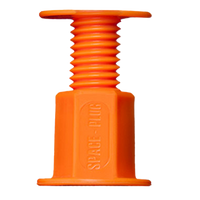
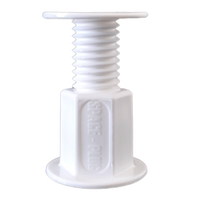
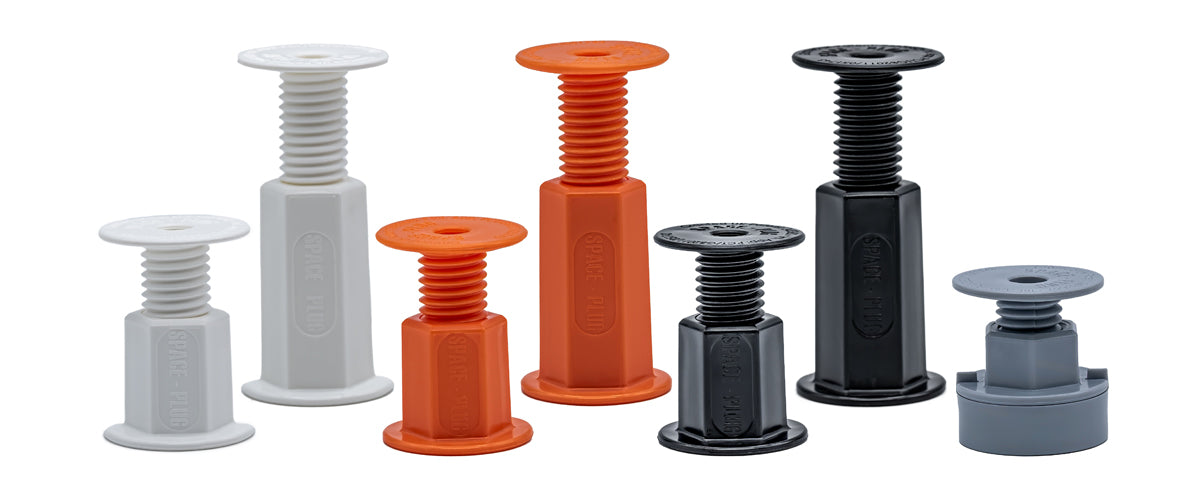
Space-Plug salva huecos técnicos de diferentes tamaños dentro del rango de ajuste de cada modelo y permite fijar el mueble directamente a la pared donde haya un punto de anclaje resistente, como un montante, a lo largo del panel trasero o del travesaño, utilizando un solo tornillo.
Cuatro sencillos pasos, desde elegir el punto de fijación hasta conseguir una sujeción segura del mueble.
Elige el punto de fijación y taladra directamente a través del panel trasero o del travesaño del mueble en dirección a la pared.
Pasa el tornillo por el mueble y por Space-Plug y colócalo en el anclaje adecuado de la pared.
Ajusta Space-Plug hasta que cubra el hueco técnico y haga contacto con la pared.
Aprieta el tornillo para fijar firmemente el mueble a la pared.
¿Quieres ver el proceso completo de instalación?
Descubre cómo funciona Space-Plug →Space-Plug está diseñado específicamente como una alternativa a las escuadras en L tradicionales para muebles bajos.
Ver la gama Space-PlugSpace-Plug está diseñado para fijar a la pared muebles bajos y otros muebles adecuados apoyados en el suelo. No está diseñado para sostener muebles altos suspendidos. Utiliza siempre tornillos y anclajes apropiados para las características de la pared.






Space-Plug has launched a new national installer survey aimed at giving tradespeople a stronger voice within the kitchen installation industry. The campaign, titled “Your Voice Matters”, is part of the...

Join Space-Plug and KitchenLink on Stand 4D50 for a special Meet the Inventor session with Cliff Petit at InstallerSHOW 2026. Visitors to InstallerSHOW 2026 will have the opportunity to meet...

Now available on Amazon.com. Space-Plug Mini, Regular and XL 25 Packs are being stocked and fulfilled by KCI Tools across the USA and Canada. Space-Plug is pleased to announce a...

Modern Kitchen Cabinet Fixing Methods Explained Fixing kitchen cabinets securely is one of the most important parts of any kitchen installation. Poor cabinet fixing can lead to movement, alignment issues,...


Space-Plug products are sold worldwide, would you like to be our next retailer?