


Choosing the Right Wall Anchor for Furniture
A furniture wall anchor secures suitable freestanding furniture to a wall to help reduce the risk of it tipping forward. Common solutions include anti-tip straps, L-brackets, tether kits, rigid brackets and adjustable fixings designed to secure furniture while accommodating a gap between the furniture and the wall.
Furniture such as dressers, bookcases, cabinets, armoires and entertainment centers can become unstable if they are climbed on, overloaded, have several drawers opened at once or are otherwise pulled forward. Securing appropriate furniture back to a suitable wall fixing point is therefore an important part of safe installation.
I’m Cliff Petit, founder of Space-Plug and inventor of the Adjustable Spacer Fixing. Before developing fixing products, I spent around ten years installing kitchens professionally, so awkward gaps, uneven walls and difficult-to-access brackets are problems I know well.
In this guide I’ll explain the main ways of anchoring furniture to a wall, where each method can work well, the compromises to consider and how to choose the right wall anchor for furniture in your home or installation.
Why anchor furniture to a wall?
Furniture can look stable during normal use but still move or tip if its center of gravity shifts. Tall or top-heavy furniture deserves particular attention, especially in homes with children, pets or other situations where furniture may be climbed on or pulled.
A correctly selected and installed furniture anchoring system helps connect the furniture to a suitable structural fixing point in the wall. The objective is not simply to add hardware, but to create a dependable connection while taking account of the furniture construction, wall type and available access.
Always follow the furniture and fixing manufacturer’s instructions. Wall construction varies, and the hardware required for a timber stud wall may be different from that required for masonry or another wall type. If you are unsure whether the furniture, wall or fixing point is suitable, use a qualified professional.

How to choose the right wall anchor for furniture
There is no single furniture wall anchor that is best for every installation. The right choice depends on the furniture itself, the wall construction and how the furniture sits in relation to the wall.
Before choosing a fixing method, consider:
- Furniture construction: Is there a strong structural section, solid back or cross-brace that can accept a fixing?
- Wall construction: Can you fix into a suitable stud, masonry substrate or another appropriate structural fixing point?
- Gap behind the furniture: Is there a baseboard, uneven wall or another reason the furniture cannot sit directly against the wall?
- Access: Can you reach behind or above the furniture during installation?
- Appearance: Will the fixing remain hidden once the furniture is installed?
- Future movement: Will the furniture need to be removed or repositioned later?
Quick comparison of furniture wall anchors
| Furniture anchoring method | Main advantage | Main consideration |
|---|---|---|
| Anti-tip straps | Flexible and commonly hidden | Access can be awkward and some designs contain slack |
| L-brackets / angle brackets | Simple rigid connection | Can remain visible and may require drilling into exposed furniture surfaces |
| Adjustable spacer fixings | Can bridge a controlled gap between suitable furniture and the wall | Requires suitable solid-backed furniture or an appropriate structural cross-brace |
| Furniture straps | Flexible and adaptable | Can be difficult to tighten where access is limited |
| Tether kits | Designed specifically to restrain furniture | Installation method and visibility vary considerably by product |
| Rigid metal anchors / brackets | Can create a rigid connection | May require good access behind the furniture and several components |
The sections below look at each option in greater detail.
- Anti-tip straps
- L-brackets / angle brackets
- Adjustable spacer fixings
- Furniture straps
- Tether kits
- Rigid metal anchors and brackets
Types of furniture wall anchors
1. Anti-Tip Straps

Description: Anti-tip straps usually connect the furniture to the wall using flexible webbing or another strong material. One attachment point is fixed to a suitable part of the furniture and the other to an appropriate structural fixing point on the wall.
Designs vary considerably, so always follow the specific manufacturer’s installation instructions rather than assuming every strap system is installed in the same way.
Common applications may include:
- Dressers
- Chests of drawers
- Bookcases
- Entertainment centers
- Freestanding cabinets
- Armoires
Installation considerations: Strap systems normally require secure attachment to both the furniture and the wall. Some designs allow a limited amount of movement before the strap becomes fully tensioned, while others can be tightened more closely.
Advantages
- Often hidden once installed
- Flexible positioning
- Widely available in different designs
Considerations
- Access behind the furniture can be awkward
- The furniture connection is only as effective as the fixing points used
- Some designs may allow limited movement before the strap becomes tensioned
2. L-Brackets / Angle Brackets

Description: L-brackets, sometimes called angle brackets, are rigid metal brackets with predrilled holes. One side of the bracket fixes to the furniture and the other to the wall.
I know L-brackets particularly well from my years installing cabinetry. They are simple and can create a rigid connection, but access and appearance can become frustrating when the bracket needs to be hidden or installed in a confined space.
Common applications may include:
- Dressers
- Bookcases
- Freestanding cabinets
- Storage furniture
- Armoires
Installation considerations: The bracket must be securely connected to an appropriate structural part of the furniture and to a suitable wall fixing point. Depending on its position, the bracket may remain visible once installed.
Advantages
- Simple rigid fixing method
- Widely available
- Easy to understand
Considerations
- May remain visible
- Can require drilling into exposed furniture surfaces
- Does not itself bridge a substantial gap between the furniture and wall
3. Adjustable Spacer Fixings

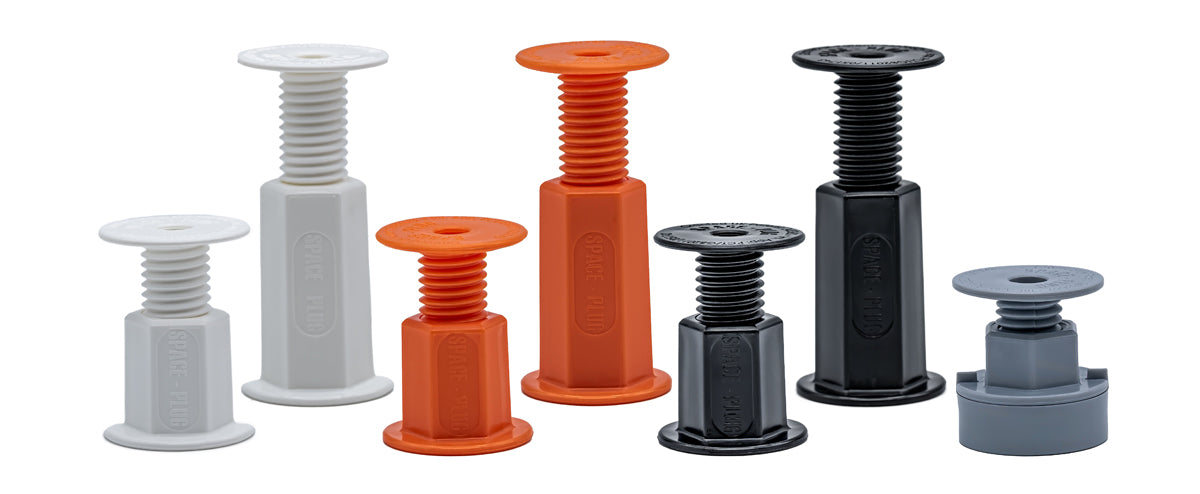
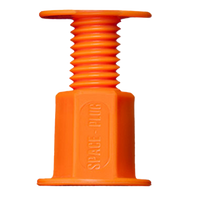
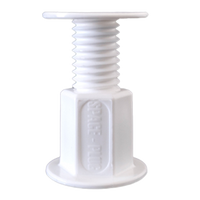
Description: The Space-Plug Adjustable Spacer Fixing is designed to create and maintain a controlled gap between suitable furniture and the wall while providing a fixing point through the furniture into the wall.
This is particularly useful where a baseboard, uneven wall or another installation condition prevents suitable furniture from sitting directly against the wall. The spacer is adjusted to bridge the required gap before the fixing screw is tightened.
If a gap behind your furniture is the problem you're trying to solve, see how Space-Plug works as a furniture wall anchoring solution for floor-standing furniture.
For furniture applications, the Adjustable Spacer Fixing should only be used where there is a suitable solid back or structural cross-brace capable of accepting the fixing. It is not intended to turn a thin decorative back panel into a structural fixing point.
Suitable applications may include:
- Suitable solid-backed bookcases
- Suitable wardrobes and armoires
- Suitable freestanding cabinets
- Other suitable floor-standing furniture where a controlled gap needs to be bridged
If you are specifically securing a bookcase, our guide to anchoring a bookcase to the wall looks at that application in greater detail.
General installation principle:
- Identify a suitable solid section or structural cross-brace on the furniture.
- Identify an appropriate fixing position and wall fixing method for the wall construction.
- Drill through the suitable furniture structure in line with the required wall fixing point.
- Position the Adjustable Spacer Fixing between the furniture and wall.
- Adjust the spacer to bridge the gap.
- Install and tighten the appropriate fixing in accordance with the relevant installation guidance.
Space-Plug Adjustable Spacer Fixings are available in different sizes for different gap requirements. You can view the current range and specifications in our Adjustable Spacer Fixings collection .
Advantages
- Adjustable to suit different gaps within the appropriate product range
- Can help accommodate baseboards and uneven wall conditions
- Fixing can remain concealed after installation
- Allows the fixing position to be selected to suit an appropriate structural point on the furniture and wall
- Provides a controlled alternative to improvised packers or spacers
Considerations
- Requires suitable solid-backed furniture or an appropriate structural cross-brace
- The wall fixing must be appropriate for the wall construction
- Not every item of furniture is structurally suitable for this method
For furniture-specific options, explore our furniture anti-topple fixing collection .
4. Furniture Straps

Description: Furniture straps overlap considerably with anti-tip straps, but the term is often used for adjustable webbing systems with buckles, connectors or other tensioning mechanisms.
Their flexibility can make them useful across many furniture types, although confined access behind the furniture can make some systems more difficult to install or tighten.
Common applications may include:
- Dressers
- Chests of drawers
- Bookcases
- Entertainment centers
- Freestanding cabinets
- Armoires
Advantages
- Flexible
- Often hidden from normal view
- Available in many configurations
Considerations
- Can be awkward to install where access is restricted
- Correct tension depends on the design and installation
- Manufacturer instructions should always be followed
5. Tether Kits

Description: Furniture tether kits normally combine straps, brackets and mounting hardware in a complete system. Depending on the design, the wall-side fitting may be installed first before the furniture is moved into position and connected.
This can make installation easier than systems that require both ends to be reached after the furniture has already been pushed toward the wall.
Common applications may include:
- Dressers
- Bookcases
- Entertainment centers
- Freestanding cabinets
- Armoires
Advantages
- Purpose-designed furniture restraint system
- Can allow furniture to sit close to the wall
- Available in a wide range of configurations
Considerations
- Part of the tether may remain visible depending on furniture height and design
- Some systems require attachment to the top of the furniture
- Installation method varies considerably between manufacturers
6. Rigid Metal Anchors and Brackets
Description: Some furniture anchoring systems use rigid metal plates, brackets, hooks or connectors rather than flexible straps. Designs vary widely, so the correct installation method depends entirely on the particular product.
These systems can create a rigid connection but may require more access behind the furniture or several separate components during installation.
Advantages
- Rigid connection
- Often concealed when positioned behind furniture
- Available in many specialist designs
Considerations
- Restricted access can make installation difficult
- Often uses multiple components
- Suitability depends heavily on furniture and wall construction
How to secure furniture to a wall
The precise method depends on the anchoring system you choose, but the same basic principles apply to most furniture installations.
- Check the furniture. Identify a strong structural section that is suitable for accepting a fixing. Do not assume a thin decorative back panel is structural.
- Check the wall. Determine the wall construction and identify an appropriate structural fixing position.
- Choose a suitable anchoring system. Consider the gap behind the furniture, available access, visibility and whether the system is suitable for the furniture construction.
- Use appropriate wall hardware. The correct fixing depends on the wall construction and the anchoring system being installed.
- Follow the manufacturer’s instructions. Do not substitute installation methods or components unless the manufacturer specifically allows it.
- Check the completed installation. Confirm that the furniture remains stable and that all fixing points are secure.
If access behind the furniture is limited or there is a substantial gap caused by a baseboard or uneven wall, an adjustable solution may be worth considering. If the furniture has no suitable structural fixing point, choose another approved restraint method or seek professional advice.
Frequently asked questions about furniture wall anchors
What is the best wall anchor for furniture?
There is no universal best wall anchor for every piece of furniture. The right solution depends on the furniture construction, wall construction, available fixing points, the gap behind the furniture and whether the fixing needs to remain concealed.
Straps and tether kits are common options where flexibility is useful. L-brackets and rigid connectors can provide a direct connection. Where suitable furniture needs to be secured while bridging a controlled gap from the wall, an adjustable spacer fixing may provide another practical option.
How do you anchor furniture to a wall?
Most systems connect a strong structural part of the furniture to an appropriate structural fixing point on the wall. The exact method varies according to the anchor design and wall construction, so the installation instructions supplied with the product should always take priority.
Can you secure furniture if there is a gap between it and the wall?
Yes, depending on the furniture and fixing method. Flexible straps can span a gap, while an adjustable spacer fixing can be used on suitable furniture where a controlled rigid gap needs to be bridged. This can be useful where a baseboard or uneven wall prevents the furniture from sitting directly against the wall.
Can a bookcase be anchored to a wall?
Suitable bookcases can be secured to a wall using an appropriate furniture anchoring system and suitable structural fixing points. The correct solution depends on both the bookcase construction and the wall.
Read our dedicated bookcase wall anchor guide for more information.
Can I use a furniture wall anchor with a baseboard behind the furniture?
Often, yes, but the appropriate solution depends on the size of the gap and the type of anchor. Flexible restraint systems can accommodate some gaps, while adjustable spacer fixings are specifically designed to bridge controlled gaps within their product range.
Choosing the right furniture anchoring solution
Furniture wall anchors are a relatively small part of an installation, but choosing the right method matters. The best solution is the one that is technically appropriate for the furniture, wall construction and installation conditions.
Anti-tip straps, L-brackets, tethers, rigid connectors and adjustable spacer fixings all solve the problem differently. Rather than choosing purely on appearance or convenience, look first at the structure you are fixing into, the gap behind the furniture and the quality of the final connection.
At Space-Plug, our particular expertise is in adjustable fixing solutions for suitable furniture and cabinetry where installers need to bridge a gap between the furniture and wall. The Adjustable Spacer Fixing was developed from real installation experience to provide a controlled alternative to improvised spacing methods.
You can explore our furniture anti-topple fixing options or view the wider Space-Plug Adjustable Spacer Fixing range to see the current products and technical information.