


If you’ve ever put together a flat-pack wardrobe at 10pm with a tiny screwdriver and a head full of regret, you’ve met cam and dowel fittings. They’re those little round metal discs and chunky dowels you twist together to pull two pieces of furniture tight. And as a kitchen fitter, carpenter or DIY’er, you’ve almost definitely used thousands of them.
They’re not glamorous. They’re not exciting. But they’ve been holding our cabinets, wardrobes and cupboards together for decades - and when you know how to use them properly, they’re actually pretty clever.

A quick bit of history (the interesting part)
Cam and dowel fittings were developed by German and Swiss furniture hardware manufacturers in the mid-20th century during the rise of flat-pack (knock-down) furniture.
Brands such as Hettich and Häfele commercialised the modern versions, and by the 1980s they had become the global standard in flat-pack furniture.
Why?
Because they allowed manufacturers to:
- ship furniture flat
- reduce transport costs
- speed up production
- let end-users assemble things without specialist tools
Basically, cam fittings made IKEA possible.
For a full breakdown of every major fixing type and how they’re used across modern furniture construction, you can read our main guide on types of furniture fixings .
What They Do (In Plain English)

A cam & dowel system works like this:
-
A dowel (the chunky threaded bit) goes into one panel.
-
A cam (the circular metal disc) sits in a pre-drilled hole on the joining panel.
-
When you turn the cam with a screwdriver, it grabs the dowel and pulls the two panels together tight.
That’s why flat-pack furniture looks clean - no big screws through the outside.
Why Fitters Have Mixed Feelings About Them
Here’s the honest truth - fitters don’t hate cam fittings. They just… have opinions.
What fitters appreciate:
- They give a strong, tight joint when installed properly
- They’re fully hidden
- They’re predictable - you know exactly how they work
- You can assemble a whole wardrobe with just a screwdriver
What fitters don’t love as much:
- If the cam breaks or strips, you’re done
- Cheap cams on budget furniture can crumble
- If a dowel is even slightly misaligned, the whole thing fights you
- Some furniture comes with cams made of “mystery metal”
The reality?
Good quality cams (Häfele, Hettich, Blum, etc.) are absolutely fine.
Cheap ones - well, every fitter has a story.
Where You’ll See Them Most
Cam & dowel fittings are everywhere in modern furniture:
- Wardrobes
- Chest of drawers
- Kitchen units (especially budget and flat-pack lines)
- Office furniture
- Bookcases
- Bed frames
Basically: if it was flat in a box once, cams held it together.
Are Cam Fittings Going Anywhere?
Not likely.
They’re still one of the cheapest, fastest ways for manufacturers to send perfectly aligned panels that can be assembled quickly. They’re a staple of the industry and will be for years.
But - and this is important - they aren’t designed to fix furniture to walls.
They hold panels together, not furniture upright.
That’s where proper furniture wall fixings come in.
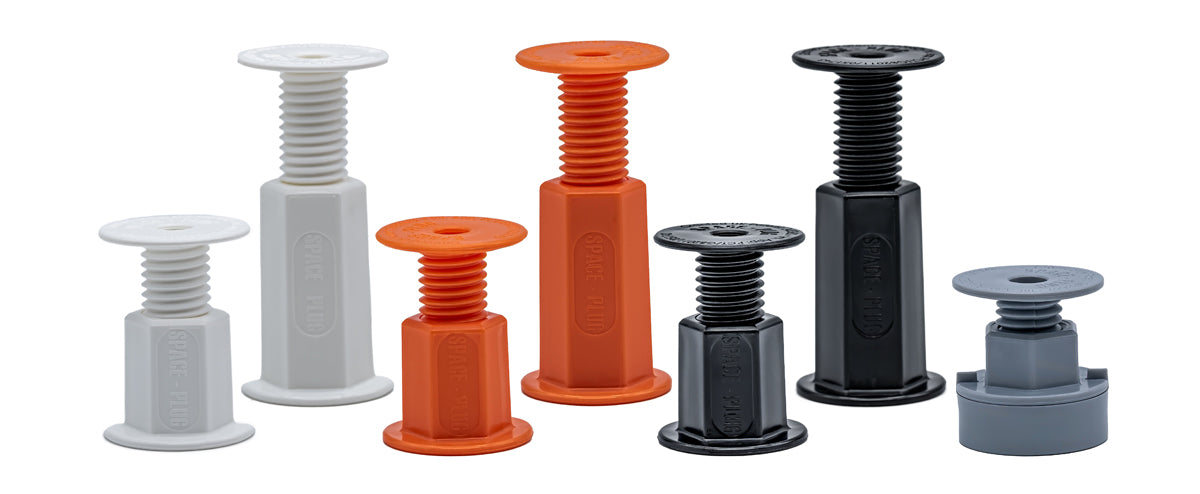
(Hello, Space-Plug adjustable spacer fixings 👋)
What Fitters Wish Manufacturers Knew
Most fitters don’t dislike cam and dowel fittings — they just wish manufacturers understood how they’re actually used on site.
Here’s what they say:
-
“Cams are brilliant for fast assembly… until the panels are slightly out.”
-
“If the cams or dowels are even a millimetre off, the whole cabinet needs persuading.”
-
“They work, but only if the holes are drilled perfectly.”
-
“Flat-pack cams are fine - factory-fitted cams are usually better.”
Fitters appreciate the speed of cams, the predictability, and the convenience.
But they also deal with the realities manufacturers rarely see:
-
walls that aren’t straight
-
floors that slope
-
cabinets needing small adjustments
-
dowels that blow out under pressure
-
cams that strip when overtightened
-
units needing reinforcement in the real world
What they really want manufacturers to know is simple:
Cams are great - but the job doesn’t end with the cabinet being assembled.
Real-world fitting involves adjustments, stabilising, levelling, and working around imperfections that never appear on a CAD drawing.
Cam and dowel systems have been around for decades, and they’ve earned that longevity by being simple, cheap and good at what they do. For manufacturers, they keep production efficient. For fitters, they keep assembly predictable. And for customers, they keep furniture affordable. Whatever else changes in the trade, this little metal-and-plastic pairing isn’t going anywhere - and understanding it properly is still one of the quickest wins on any installation.